Introduction
Adobe is a prominent multimedia technologies company, founded by John Warnock and Charles Geschke in 1982. This California-based company is known for their tools for creators to bring their ideas to fruition, with an ever-growing array of programs, many of which have found their way into the public discourse due to their ease-of-use and high skill ceiling. Programs such as, but certainly not limited to; Flash for animation, Photoshop for an array of photo editing tools, Premiere for video editing, Audition for audio editing and mixing, and After Effects for special effects. While having built a long-standing reputation with creators due to their time in the industry and consistency of their programs, Adobe also has established a stylized presence online to draw in new content creators, as well as showcasing what can be done with their programs. Featured below is an examination of their different media profiles and how they establish their presence on the internet.
Twitter is probably the most important outlet for brands to reach out to their consumers; whether it be through advertising, support, or making press statements. This is due to the short format of Twitter, and the amount of followers that can instantly be reached with one post.
Adobe does three things in their Twitter feed:
1. Feature artists’ work that was created using their products
2. Post articles relating to technological changes and business ventures around the world
3. Directly advertise new products and features
1.
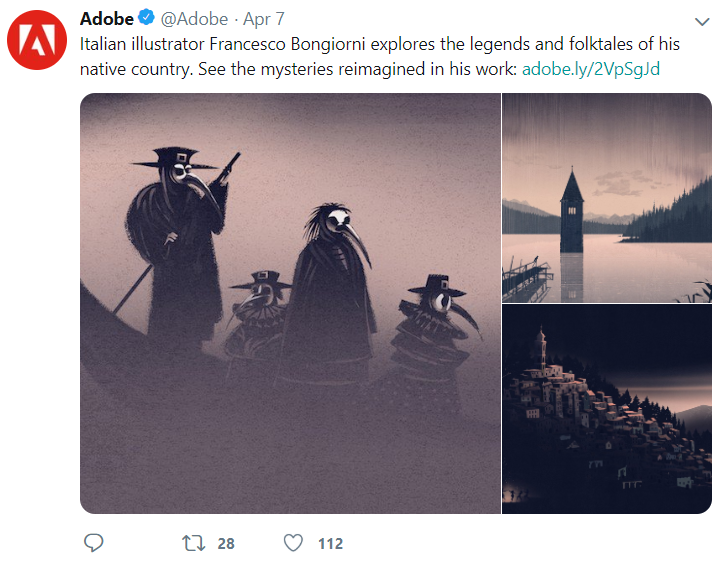
While featuring an artists’ hard work, which does good for the artist, as well as the heighten the companies’ public image, this also advertises the sorts of things that are possible when working with their programs.
2.
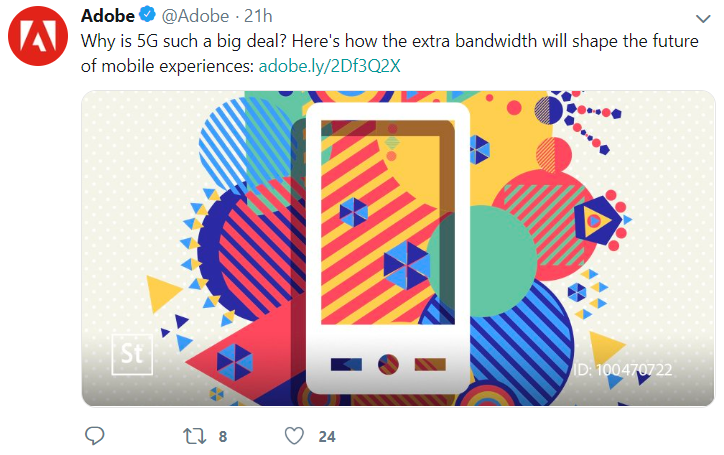
This tweet directly appeals to businesses and technologically-minded consumers, providing an interesting or informative read.
3.
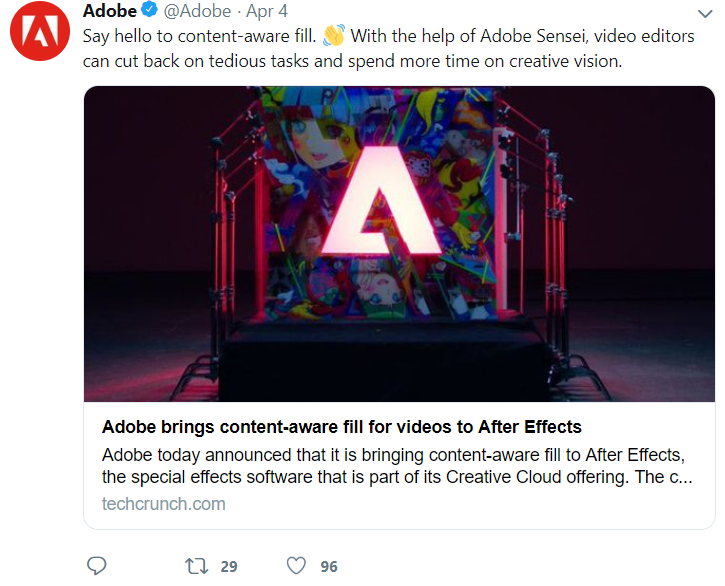
Their Twitter does a good job at covering many bases, but does not shoot for a viral marketing campaign like many companies do nowadays, which is OK, not every company has to market the same way, and Adobe can market based on their reputation alone, whereas other companies try to stir controversy for publicity.
Facebook has fallen out of relevancy for many younger people on the internet, but every brand still manages to have a page, due to the sheer user count on Facebook. Their Facebook accomplishes much of what their Twitter does, and a good amount of the content on their Facebook was also hosted on their Twitter page.
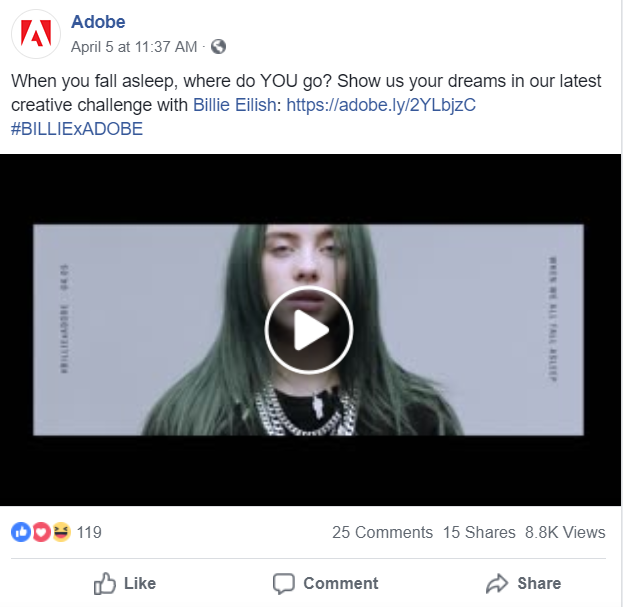
Something good that Adobe’s Facebook presence does well is the way they have different pages for each of their individual products and services:
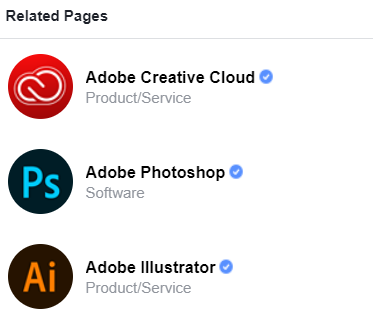
This connects all their pages nicely through a web of hyperlinks, increasing overall traffic to each of their services.
YouTube
Adobe has their YouTube channel branded under their “Adobe Creative Cloud” service, which is their paid monthly subscription service to all the programs in the Adobe suite.

Adobe makes great use of their YouTube account. They have amassed a great following due to the sheer amount of content available. Instead of just advertising, there is actual content here to digest.
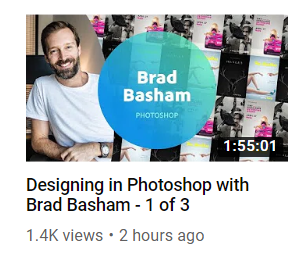
This video features an art director for Adobe, and features a helpful and entertaining tutorial for users.
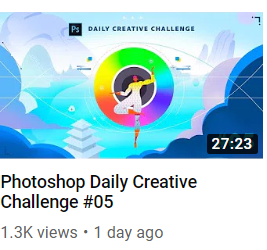
Other content, like daily challenges using their programs, serving as entertainment and showcasing the possibilities with their programs.
Overall, this is a fantastic use of YouTube as a medium, there is a constant stream of well-produced content showcasing their products, different artists, and acclimating us with some of Adobe’s staff. Not many corporations can do this very well.
Website
Adobe’s desktop website is very well designed. The homepage is very colorful and easy to navigate using a list of categories to choose from at the top, from everything to creative apps to solutions for businesses. A massive deal is displayed as well, with colorful art to go along with it.

Funny enough, this is the deal I get with creative cloud as a student, and its a pretty good deal considering the amount that I need these programs for my major. This banner is large, colorful, and brief. It’s extremely hard to miss, so it’s a great way to get a user’s attention.

With programs to help build attractive websites, it’s no surprise that Adobe’s website is attractive, colorful, and easy to navigate. It is also extremely modern, and focused on vertical spacing so it is easy to translate onto mobile devices.
Mobile Apps
Adobe also maintains a solid mobile presence, although their programs were meant specifically for PC and Mac. These mobile programs mostly serve as companion apps for their main desktop applications. On the Google Play Store, they have at 27 apps listed in total, all of which pretty high in rating.

Overall, they have their bases covered when it comes to range of devices supported with their programs. However, maybe the next step is optimizing full versions of Premiere or other programs for mobile devices, although that would require large amounts of processing power from the user’s device, and quite a bit of UI design changes for the programs themselves.
More Online Presence

Adobe has other ways of reaching potential or existing customers, as well. They have their own blog that details different things that their company is up to. This particular post is about a basketball team that benefits from their sign-in program, and makes purchasing tickets at different price points and easier task. Of course, this blog’s main purpose is advertising, but this does serve a good overall purpose.

Adobe also gets online presence though way of news articles. This article from ‘The Verge’ advertises Adobe’s new drawing app that allows users to paint realistically and accurately. This specific app is coming out for Apple and Android devices.
Blogs About Adobe
Since Adobe has a wide range of products with many different usages, there are countless bloggers looking to entice readers through the use of tutorial.

This specific blog listed above has different design solutions for budding artists and creators. This blog exists to link users to many different tutorials around the web. This is great for publicity, because existing customers can find all these tutorials in one place, and interested consumers can see all the things that Photoshop can help them achieve.
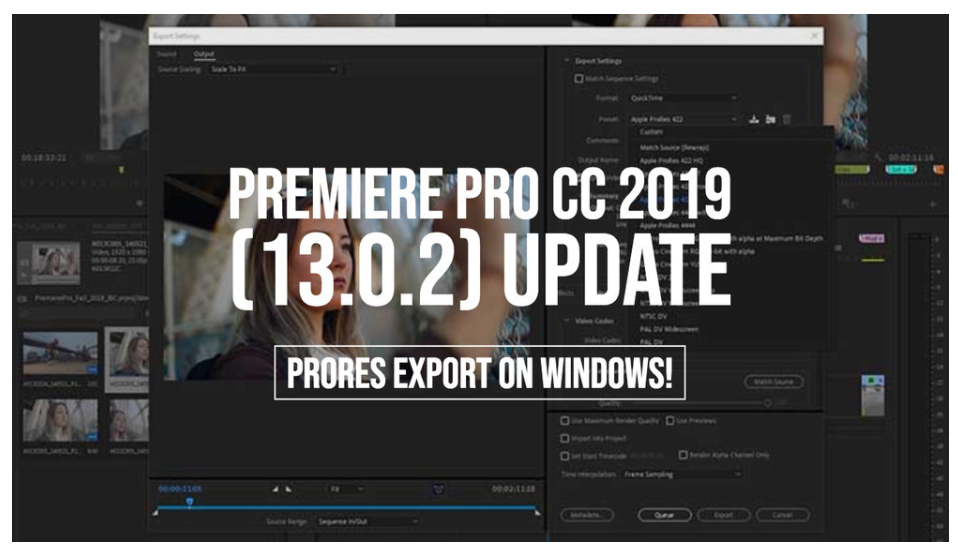
Entire websites can exist surrounding some Adobe applications. “Premiere Bro” is a good example. This whole site revolves around the versatile editing software, and this blog in particular is all about recent changes in Premiere Pro CC. Things like this are necessary for newer users or even experienced users to help broaden their skill set. These applications get frequent updates, and for blogs to inform users what these updates can be used for is very good for everybody.
Twitter Attention
Companies thrive on media attention, and a variety of things show up if you search for Adobe’s hashtag on Twitter.
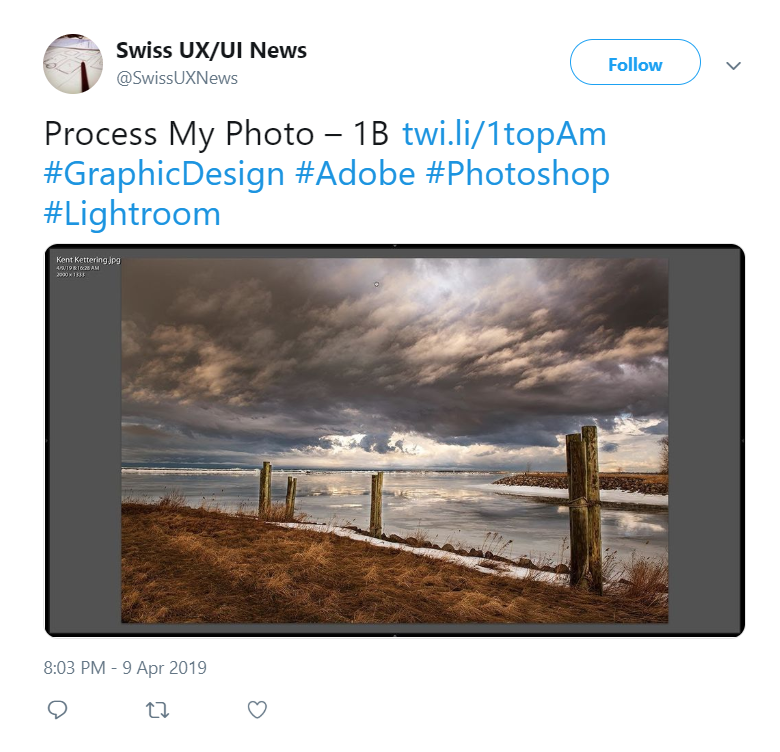
A lot of tweets like this use the Adobe hashtag simply because artists like to show off their work to others, and potentially get the attention of the creators of the programs. I’m guessing this user specifically tagged Adobe because they often feature artists on their site. A lot of artists like to boast about their program knowledge, as well. As we can see, this user used multiple different programs to edit this picture.
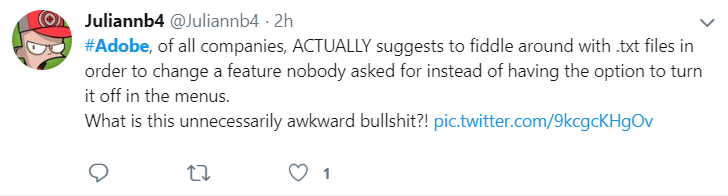
Companies also get the most backlash on sites like this. This user in particular is angry about the fact that there is an option that you can’t turn off in the program itself, and you need to modify the specific text file in notepad to get the desired result. I, too, have had problems like this with Adobe programs, such as the lack of a proper underlining text feature within the text tools of Adobe Premiere, and having to create a separate window in order to have more advanced tools. People take to Twitter against companies because Twitter actually somewhat gives people a voice against issues that they’re having, and others can converse about it, as well.
Conclusion
Overall, I can confidently say that Adobe has a pretty solid online presence. While most companies try to aim for a specific younger or older audience and use targeted marketing campaigns, I think Adobe tries to keep its audience very neutral. A lot of its advertising is based off of professionalism and the long reputation and history the company has with these different programs. Much of the advertising connects within itself, with hyperlinks to get to separate pages for each Adobe program, and with many users making tutorials and blogs about each program, as well. There is a rising popularity of using these sorts of programs among the masses, considering that there are lots of content creators on the internet that are professional in their production, and the attractiveness and professionalism of the websites and pages will definitely draw in amateurs and professionals alike.

 Trev's MI 201 Brand Report